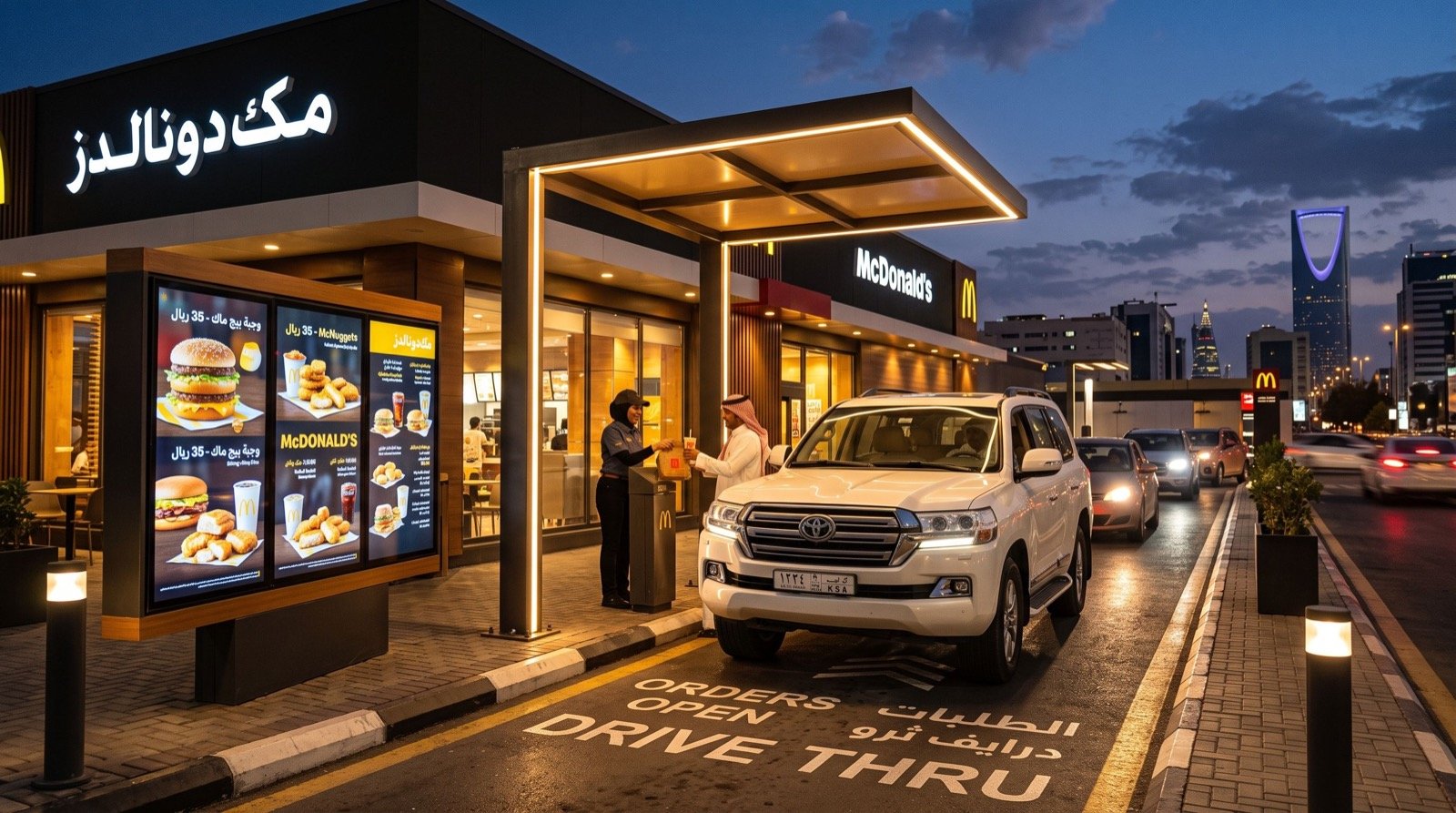
Riyadh’s quick-service restaurant scene has gotten faster, louder, and far more competitive heading into 2026, and the lane out back is where a lot of that competition is actually decided. Choosing HME Drive Thru in Riyadh technology over a generic headset setup is increasingly the difference between a lane that clears in under three minutes and one that backs up onto the main road during lunch rush. This buyer’s guide walks through exactly what to evaluate, step by step, before signing a purchase order.
Why Riyadh QSR Brands Are Upgrading Drive-Thru Tech in 2026
Fuel prices, labor costs, and customer patience have all moved in the same direction this year: less tolerance for a slow lane. Franchise groups running three or more locations across Riyadh are now benchmarking order-to-window time the same way they benchmark food cost, because a slow drive-thru directly caps how many cars a location can serve per hour — and therefore how much it can earn.
Step 1: Audit Your Current Lane Communication
Before buying anything, time your own lane for a week. Track order-taking time, order-confirmation accuracy, and total time from menu board to pickup window across different shifts. Most operators are surprised to find the bottleneck isn’t the kitchen — it’s the headset system relaying garbled orders between the crew and the car.
- Record average seconds per car at peak and off-peak hours
- Log how often an order has to be repeated or corrected at the window
- Note dead zones where headset audio drops between stations
Step 2: Compare Drive Thru Solutions Before You Buy
Once you know where the lane actually loses time, compare vendors against that specific weakness rather than a generic feature sheet. Full-service Drive Thru Solutions typically bundle the headset, order-confirmation display, and timer software together, which matters because mismatched components from different vendors are the most common cause of the dropped-audio complaints franchise managers report.
Step 3: Evaluate HME Drive Thru in Riyadh Specifically
HME-brand systems have a long track record in quick-service environments internationally, and local Riyadh deployments bring the same digital wireless headset architecture, noise-cancellation tuning, and multi-lane support that busy dual-lane locations need. A proper HME Drive Thru in Riyadh rollout should include a site survey, since headset range and interference vary by building material and nearby equipment like walk-in freezer compressors.
HME vs. Standard Headset Systems: Spec Comparison
| Spec | Standard Wireless Headset | HME Digital System |
|---|---|---|
| Audio clarity in high-noise lanes | Moderate, prone to static | Noise-cancelling, consistently clear |
| Multi-lane / dual-lane support | Limited | Built-in |
| Order-confirmation display integration | Separate add-on, often incompatible | Native integration |
| Expected hardware lifespan | 2–3 years | 5+ years with maintenance |
Step 4: Don’t Forget the Back Office
A faster lane generates more transactions per hour, which means more invoices, more CRM records, and more data hitting your billing system during the exact window you’re trying to optimize. If your support desk and e-invoicing setup can’t keep pace with a faster drive-thru, you’ve just moved the bottleneck inside instead of removing it.
Operators handling that side of the upgrade often lean on the quality service providers who specialize in aligning e-invoicing and support-desk workflows with exactly this kind of operational speed-up.
On the equipment side, it’s also worth knowing that wireless communication devices used in commercial settings in the Kingdom fall under type-approval rules — the Communications, Space & Technology Commission publishes current requirements for wireless equipment used commercially, which is worth checking before importing or installing any new headset hardware; see the CST’s official regulatory guidance for the current equipment rules.
Budgeting for an HME Rollout in 2026
Franchise owners planning next year’s capital spend should budget for more than just the headset units themselves. A realistic line-item list includes the headset base station and belt packs, an order-confirmation display if one isn’t already installed, site survey and installation labor, staff training time, and an annual maintenance or support contract.
Multi-location groups typically negotiate better per-unit pricing once they commit to rolling the same system across three or more sites, which is worth raising directly with the vendor during the quote stage rather than after signing a single-location contract.
Training Staff on the New Lane Workflow
Hardware alone doesn’t fix a slow lane if the crew hasn’t been trained on the new workflow. A short but structured training pass makes the difference between a smooth go-live and a confused first week:
- Walk new hires through headset etiquette — clear, short confirmations instead of long sentences
- Teach the order-confirmation screen as a double-check step, not an optional extra
- Run a timed drill during a slow shift before relying on the system during peak hours
- Assign one shift lead per location to own lane-time reporting weekly
Locations that skip this step tend to see slower-than-expected results in the first month, purely because staff default back to old habits under pressure.
Frequently Asked Questions
How long does an HME Drive Thru in Riyadh installation usually take?
A single-lane installation typically takes a day once the site survey is complete, while dual-lane or multi-location rollouts are usually scheduled over one to two weeks depending on franchise group size.
Can Drive Thru Solutions integrate with our existing POS?
Most modern systems are built with open integration in mind, so they can connect to existing point-of-sale and kitchen-display software rather than requiring a full replacement.
Is a digital wireless headset really worth the upgrade over a basic system?
For any location doing meaningful lunch or dinner rush volume, yes — the noise-cancellation and reliability difference directly reduces order errors and repeated conversations, which is where most lane time is actually lost.
Do I need a site survey before buying drive-thru headset hardware?
Strongly recommended. Building materials, nearby equipment, and lane layout all affect wireless range and interference, and a short survey prevents an expensive mismatch between hardware and site conditions.
Common Mistakes Operators Make When Upgrading
A few recurring mistakes show up across Riyadh QSR upgrades, and all of them are avoidable with a bit of planning:
- Buying headset hardware without a site survey, then discovering dead zones after installation
- Mixing components from different vendors, which creates compatibility and warranty headaches
- Skipping staff training and assuming the crew will “figure it out” on day one
- Upgrading the lane without checking whether the back-office billing workflow can keep up with faster throughput
None of these mistakes are expensive to avoid upfront, but each one is expensive to fix after the fact, usually in the form of lost sales during a chaotic first month.
Final Thoughts
Upgrading to HME Drive Thru in Riyadh technology isn’t just a hardware swap — it’s a full-funnel decision that touches the lane, the kitchen, and the billing desk behind it. Audit first, compare vendors against your actual bottleneck, and make sure the back office can handle the extra speed before you flip the switch on a faster lane. Operators who follow this sequence tend to see measurable improvement within the first month rather than months of trial and error.